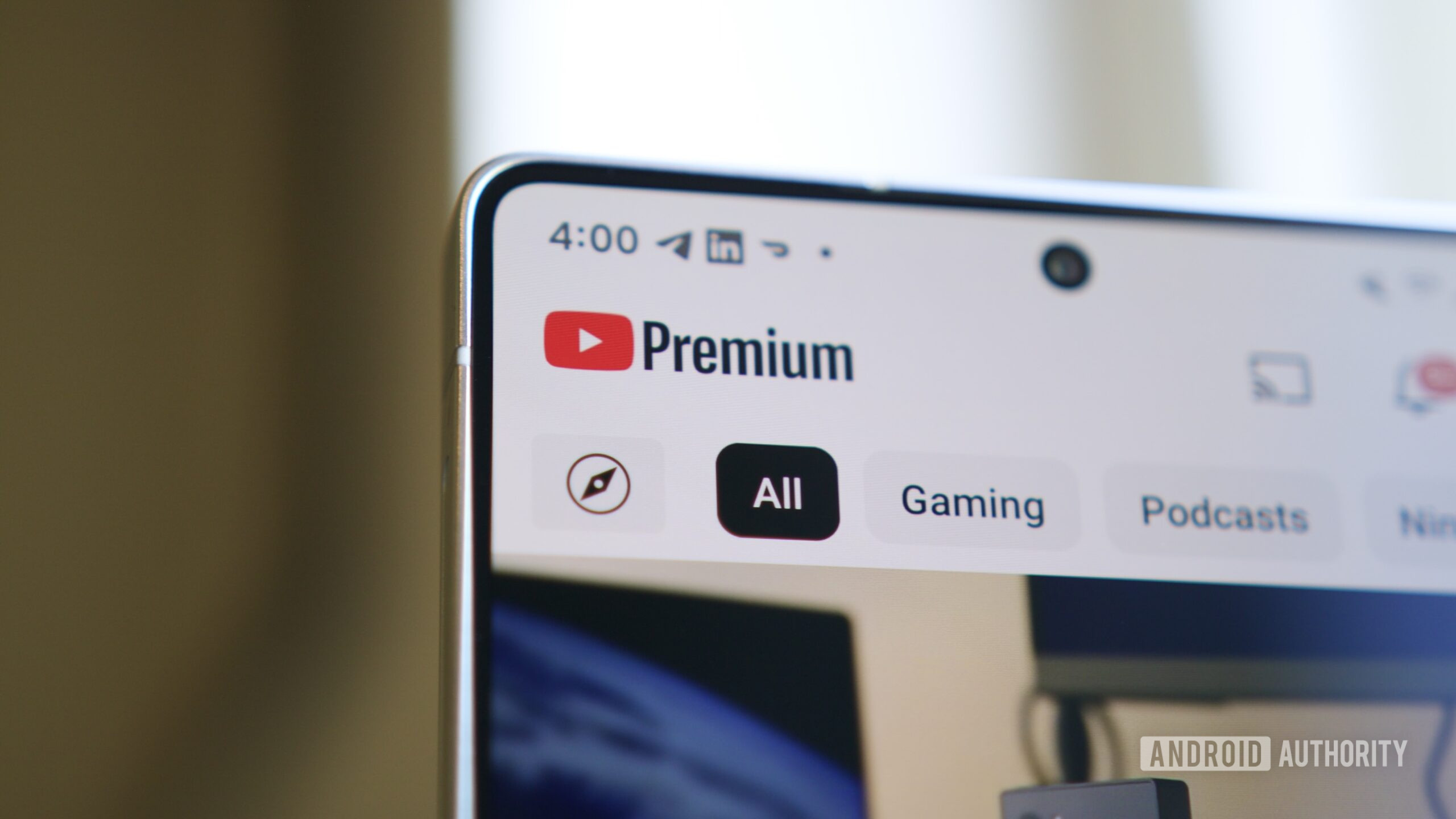
The article, “YouTube Premium’s main shortcoming is stopping me from subscribing” by Andy Walker, published on Android Authority on September 14, 2025, articulates the author’s deep-seated frustration with YouTube Premium’s current subscription models. Despite YouTube’s persistent efforts to promote Premium through relentless advertisements and by restricting essential features like free downloads and background play, Walker finds the existing plan structures inadequate for his household, a sentiment he believes is shared by many other users.
Walker meticulously outlines the limitations of the available YouTube Premium tiers. He disqualifies the $7.99/month student plan due to ineligibility. The individual plan, priced at $13.99/month, while suitable for a single user, becomes prohibitively expensive for a couple like Walker and his partner, costing $27.98/month. This price point, he highlights, is even higher than Netflix’s premium 4K streaming tier, rendering it an unattractive option.
The family plan, at $23.99/month, initially appears to be a more cost-effective alternative to two individual subscriptions, ostensibly offering up to six user slots. However, Walker points out a significant drawback: YouTube’s increasingly strict enforcement of rules against sharing benefits with individuals outside the immediate household. For a two-person household, this policy means four of the six available slots would go unused, leading to a feeling of paying for services that cannot be fully leveraged. Drawing from a past negative experience with Netflix’s similar sharing restrictions, Walker expresses a strong aversion to repeating such a scenario. He asserts that, in its current state, the $24/month family plan for only two people lacks sufficient value, especially without truly unique or transformative features. He concludes that YouTube Premium urgently needs a mid-range, two-person subscription tier to appeal to users like him.
This demand for a more tailored plan is strongly corroborated by an in-article poll, where a significant 65% of 1509 respondents affirmed they would subscribe to a YouTube Premium two-person plan, contrasting with 35% who would not. This data underscores a clear market need for such an offering.
Furthermore, the article critically examines whether YouTube Premium’s features justify its “premium” label and price tag. Walker, a contented Spotify Duo subscriber, appreciates Spotify’s tailored two-person plan, which offers ad-free music and collaborative tools at a more competitive price than even a solo YouTube Premium subscription. He argues that YouTube Premium’s value proposition for a couple pales in comparison to Spotify Duo.
A key point of contention for Walker is the lack of exclusivity surrounding YouTube Premium’s marquee features. He notes that essential benefits like ad-free viewing and background play can be freely accessed through various third-party browsers and applications, such as the latest Microsoft Edge Canary build, Banana Browser, and Brave. This availability of core Premium functionalities elsewhere severely diminishes the incentive to pay over $280 annually for a YouTube Premium subscription.
Beyond the pricing and feature exclusivity, Walker expresses broader dissatisfaction with the overall YouTube platform experience, irrespective of a Premium subscription. He laments the pervasive “low-quality AI slop” dominating the Trending section, the overwhelming presence of “Shorts,” the introduction of text-posts, the app’s notable lack of customizability, and consistently “mediocre personal recommendations.” He contends that merely paying $20/month would not rectify these fundamental issues. Additionally, while he finds YouTube Music a pleasant experience, he believes it lags behind competitors like Spotify and lacks the standalone appeal to warrant its inclusion in the Premium bundle, especially given its associated cost. Ultimately, Walker believes YouTube must present a more compelling argument for its Premium service, with the introduction of a Duo plan being a crucial step to entice him and a multitude of other users.
Despite these criticisms, a ray of hope emerges: YouTube has reportedly been piloting a two-person Premium plan in several international markets, including France, Hong Kong, India, and Taiwan. Early indications suggest such a plan could be priced at approximately 1.5 times the cost of an individual plan, a pricing structure Walker finds considerably more appealing and potentially sufficient to reconsider his current stance. However, there is no official confirmation regarding a global rollout, and YouTube refrained from commenting on the pilot’s future when contacted. Walker concludes by reiterating his and countless other users’ increasing exasperation with the limited subscription options, emphasizing that a dedicated two-person plan would finally offer the much-needed flexibility.
A second, broader poll within the article, surveying 5594 users, provides additional context on YouTube Premium’s market penetration and appeal. It revealed that 60% are long-term subscribers, 9% are recent subscribers, 11% are actively considering a subscription, and a significant 20% have no plans to subscribe. This breakdown indicates a substantial segment of users who are either hesitant or actively disinclined to subscribe, further highlighting the need for more diverse and attractive plan structures.
The article’s comments section illustrates a wide spectrum of user opinions. Some commenters exhibit a misunderstanding of the two-person plan’s limited availability or misinterpret sharing rules for individual plans. One particularly critical commenter dismissed Walker’s arguments as “rage bait,” advocating for YouTube Music’s superiority over Spotify and trivializing the concept of “unused slots” in a family plan. This commenter also made a questionable statistical claim about iOS mobile YouTube usage, which was subsequently challenged by another user. In contrast, a frustrated former Premium subscriber shared their reasons for cancellation, citing the pervasive in-video sponsored ads, complex app configurations, intrusive new features like “Playables” and “Shorts,” and aggressive upsells. Another user highlighted persistent issues faced by Google Workspace account holders, who are often treated as “second-class citizens” regarding Google’s premium services. These varied user responses collectively emphasize the complexity of subscriber needs and the mixed perceptions of YouTube Premium’s current value proposition in the market.