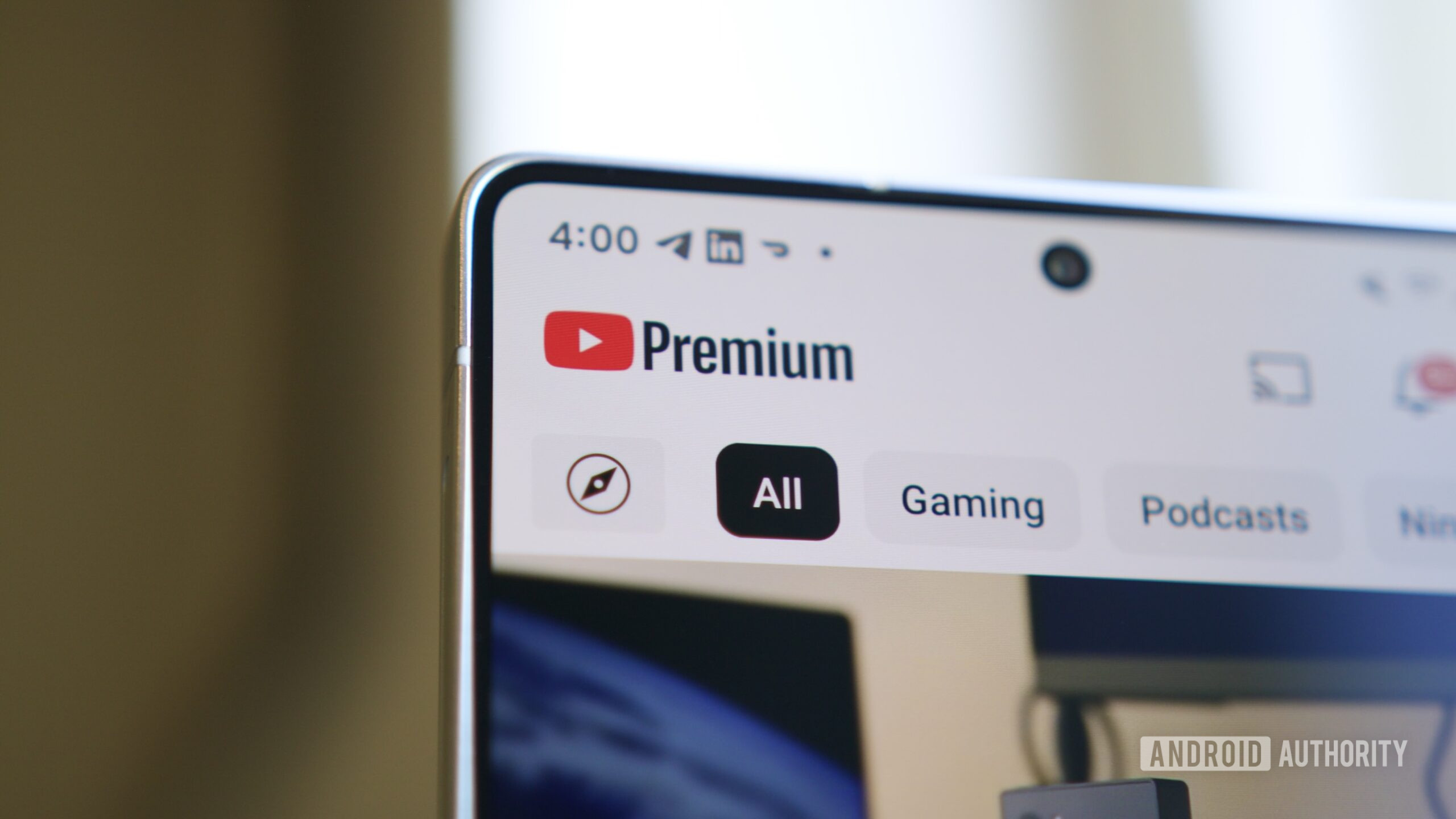
YouTube Premium’s Main Shortcoming: The Absence of a Two-Person Plan and Diminishing Value
This article, published on Android Authority by Andy Walker on September 14, 2025, argues that despite YouTube Premium’s benefits like ad-free viewing, downloads, and YouTube Music Premium, the service lacks a subscription plan suitable for couples, which is a significant barrier to adoption for many users. Walker, a self-identified user whose household consists of himself and his partner, finds himself in a demographic underserved by YouTube’s current offerings.
The Problem with Current YouTube Premium Tiers
YouTube Premium offers three main tiers: Student, Individual, and Family. The Student plan, priced at $7.99/month, is not an option for non-students. The Individual plan, at $13.99/month, would require two separate subscriptions for Walker and his partner, totaling $27.98/month. This cost is deemed prohibitively high, exceeding even the price of Netflix’s premium 4K tier, and is therefore not a viable option.
The Family plan, available for $23.99/month, allows up to six members from the same household. While cheaper than two individual plans, it presents its own set of issues. Walker notes that having four unused “slots” feels like an inefficient use of resources, and YouTube’s increasingly stringent enforcement of household residency rules for family plans prevents him from sharing benefits with family members living elsewhere. This echoes his negative experience with Netflix, leading to a reluctance to subscribe to a plan that doesn’t genuinely fit his household size. Ultimately, for a two-person household, the Family plan is deemed excessive and not a good value proposition, especially given the strict enforcement of cohabitation requirements.
Is YouTube Premium Truly “Premium” Enough?
Walker further questions the overall “premium” value of the subscription. He draws a comparison to Spotify, which offers a “Duo” plan that provides ad-free music and collaboration tools for two users at a lower price than a single YouTube Premium subscription. This highlights a perceived gap in YouTube’s offerings for couples.
Moreover, some of YouTube Premium’s most appealing features, such as background play and ad-blocking, are increasingly available through alternative means without a paid subscription. Browsers like Microsoft Edge Canary, Banana Browser, and Brave are cited as examples that offer similar functionalities, undermining the exclusivity and value proposition of paying over $280 annually for YouTube Premium.
Beyond the pricing and feature exclusivity, Walker criticizes the general user experience of YouTube. He points to the proliferation of low-quality AI-generated content on trending feeds, the abundance of Shorts, the addition of text-posts, the lack of app customizability, and often mediocre personal recommendations as factors that detract from the platform’s overall quality. He also suggests that YouTube Music, while enjoyable, still trails competitors like Spotify and does not add enough inherent value to justify the bundled premium video service. Given these concerns, he believes that simply paying $20/month would not significantly enhance the fundamental YouTube experience.
The Potential for a Two-Person Plan
There is a glimmer of hope for users like Walker. YouTube has been piloting a two-person Premium plan in select markets, including France, Hong Kong, India, and Taiwan. Based on the observed pricing in these regions, such a plan could cost approximately 1.5 times the individual subscription rate, which Walker indicates would be a far more attractive value proposition for his household. However, there is no official confirmation or timeline for a global rollout of this plan, and YouTube has not responded to inquiries regarding its future. This uncertainty leaves many potential subscribers in limbo, desiring a tailored plan that currently isn’t widely available.
Reader Reactions and Diverse Perspectives
The article generated a variety of comments, reflecting different user experiences and viewpoints. Some readers questioned the author’s premise, stating that a two-person plan already exists or suggesting that the individual plan could be shared within a household, or that the Family plan offers sufficient value. One commenter, for example, argued that the Family plan isn’t a “bulk discount” but a plan for “YOUR FAMILY,” regardless of size, and that YouTube Music is superior to Spotify. Another passionately defended the Family plan, suggesting that the author’s comparison with Spotify was flawed and that YouTube Music’s broader catalog, including unofficial releases, makes the bundle a great deal even for two people, dismissing concerns about unused “slots” as “nonsensical.”
Conversely, other commenters echoed the author’s frustrations and provided additional reasons for their discontent with YouTube Premium. One reader described canceling their subscription due to scripted/sponsored in-video ads that Premium doesn’t block, poor AI recommendations, intrusive “Playables,” and the prevalence of Shorts, concluding that the overall value had “gone way down.” Another highlighted issues with Google treating Workspace accounts as “second-class citizens” in the Google ecosystem, causing setup grief for services like Nest. These comments underscore that the perceived value and utility of YouTube Premium are highly subjective and depend on individual use cases and market availability of plan options.
In summary, the article and its subsequent discussion highlight a significant market demand for a flexible YouTube Premium subscription, specifically a two-person plan, to cater to smaller households. Without such an option, coupled with concerns about the overall platform experience and the availability of premium features through free alternatives, YouTube struggles to convince a segment of users, including the author, that its Premium service is worth the annual investment.