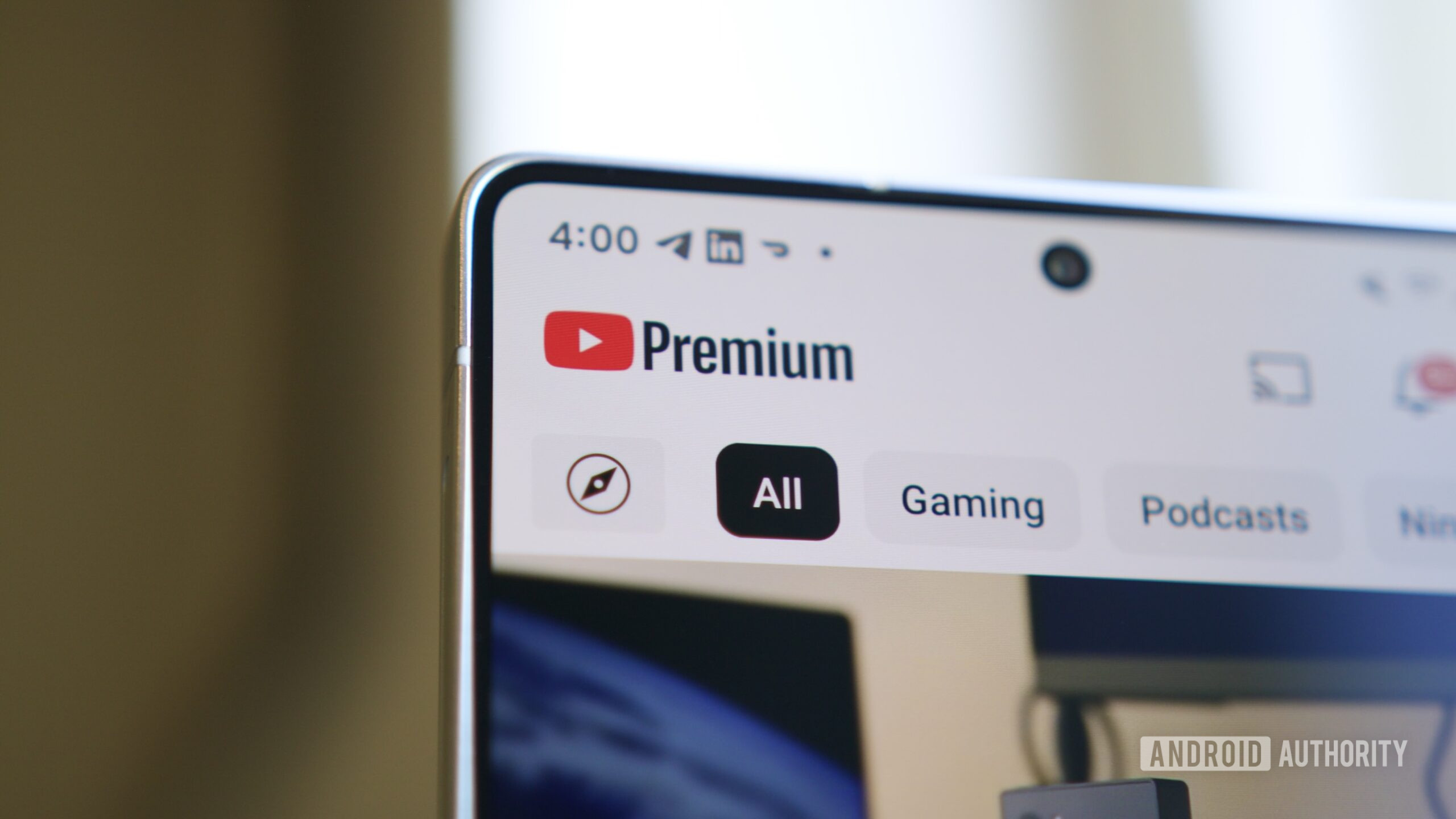
The article “YouTube Premium’s main shortcoming is stopping me from subscribing” by Andy Walker, published on Android Authority on September 14, 2025, delves into the author’s significant dissatisfaction with YouTube Premium’s current subscription model. Walker contends that, despite the service’s advertised advantages—such as an ad-free viewing experience, video downloads, and access to YouTube Music Premium—a critical flaw in its plan offerings prevents him, and likely many others, from subscribing. This issue stems from YouTube’s failure to provide a suitable subscription tier that caters to the needs of households comprising more than one individual but fewer than a full family unit.
Walker meticulously outlines the shortcomings of the three existing YouTube Premium tiers: the Student plan, the Individual plan, and the Family plan. He quickly dismisses the Student plan, priced at $7.99 per month, as he is no longer eligible. His primary concern, however, lies with the Individual plan, which costs $13.99 per month. While this might seem suitable for a single user, Walker shares his household with a partner who also desires an ad-free YouTube experience. Subscribing to two separate Individual plans would result in a combined monthly expense of $27.98, a sum he finds excessive, even noting its higher cost compared to Netflix’s premium 4K streaming tier. He succinctly articulates his predicament: “I’m no longer a student, I don’t live alone, nor do I live with five other people. No Premium plan makes sense for me.”
The Family plan, priced at $23.99 per month, initially appears to be a more cost-effective alternative than purchasing two individual subscriptions, offering benefits for up to six household members. However, Walker reveals that this option is also problematic due to YouTube’s stringent enforcement of residency rules, which mandate that all linked family members must live at the same address. This policy renders the remaining four unused slots on a Family plan useless for his two-person household, as he cannot extend the benefits to family members residing elsewhere. Drawing from a past negative experience with Netflix enforcing similar household restrictions, Walker expresses his strong aversion to facing such an issue again. He concludes that the Family plan, despite its theoretical capacity, provides insufficient value for his specific needs. He ultimately judges the $24 monthly cost as unjustifiable for the current set of features, particularly when applied to just two users, and emphasizes the urgent need for a mid-range, two-person subscription tier to appeal to users like himself.
Beyond the structural deficiencies of the subscription plans, Walker critically assesses the actual “premium” value offered by YouTube Premium, questioning if its features are compelling enough to warrant an annual outlay exceeding $280. He highlights that many of YouTube Premium’s flagship features are no longer exclusive or difficult to access without a subscription. For instance, he praises Spotify’s Duo plan, which provides ad-free music and collaborative tools for him and his partner at a cost lower than a single YouTube Premium subscription, illustrating a more favorable value proposition in a comparable service category. He suggests that YouTube Premium, particularly at its Family plan pricing, does not offer a similar level of perceived value for a two-person household.
Moreover, Walker points out that readily available web browsers and third-party tools have diminished the exclusivity of key Premium features. He specifically mentions how the Microsoft Edge Canary build, Banana Browser, and Brave browser all integrate background play and robust ad-blocking capabilities, effectively replicating core aspects of the Premium experience without any subscription fees. This accessibility of ‘premium’ features through alternative means further erodes the incentive to pay for YouTube Premium.
The author extends his critique to the overall user experience on YouTube, arguing that the platform’s quality has declined to a point where it struggles to justify a paid subscription. He enumerates several grievances, including the prevalence of low-quality, AI-generated content on the Trending page, the pervasive and often intrusive nature of Shorts, the introduction of text-posts, a severe lack of user customization options within the app, and consistently unhelpful or “mediocre” personalized content recommendations. He asserts that paying $20 per month would not rectify these fundamental issues. While acknowledging that YouTube Music is an enjoyable service, he finds that it still trails behind competitors like Spotify and is not compelling enough to warrant a standalone purchase. Its bundling with a video service, in his view, does not significantly enhance the overall value of the Premium package. In sum, Walker maintains that YouTube must substantially improve its value proposition to persuade him and others that Premium is a worthwhile investment, with a dedicated two-person plan being a crucial step.
A potential solution to Walker’s dilemma may be on the horizon. YouTube has reportedly been conducting trials of a two-person Premium plan in specific international markets, including France, Hong Kong, India, and Taiwan, for several months. Based on the observed pricing structures in these regions, such a plan could be priced at approximately 1.5 times the cost of a standard solo plan. Walker expresses that this pricing model represents a “value proposition I’d consider,” suggesting it could lead him to “reevaluate my Premium pause.” However, he cautions that there is no concrete indication of when, or if, this two-person plan will be rolled out globally. His attempts to contact YouTube for clarification on the pilot program’s future remained unanswered prior to the article’s publication. Walker concludes by reiterating his growing frustration with the current limited and ill-fitting plan options, underscoring that the introduction of a dedicated two-person plan would provide a much-needed and viable subscription choice for thousands of users who face similar challenges.